
Research behind our interactive storytelling system
Early Academy is a publishing system for polished interactive storybooks: 15–25 page stories, professional narration, subtle animated scenes, hundreds of contextual audio moments, and tappable discoveries. This evidence library explains why we design for guided story engagement instead of passive video consumption.

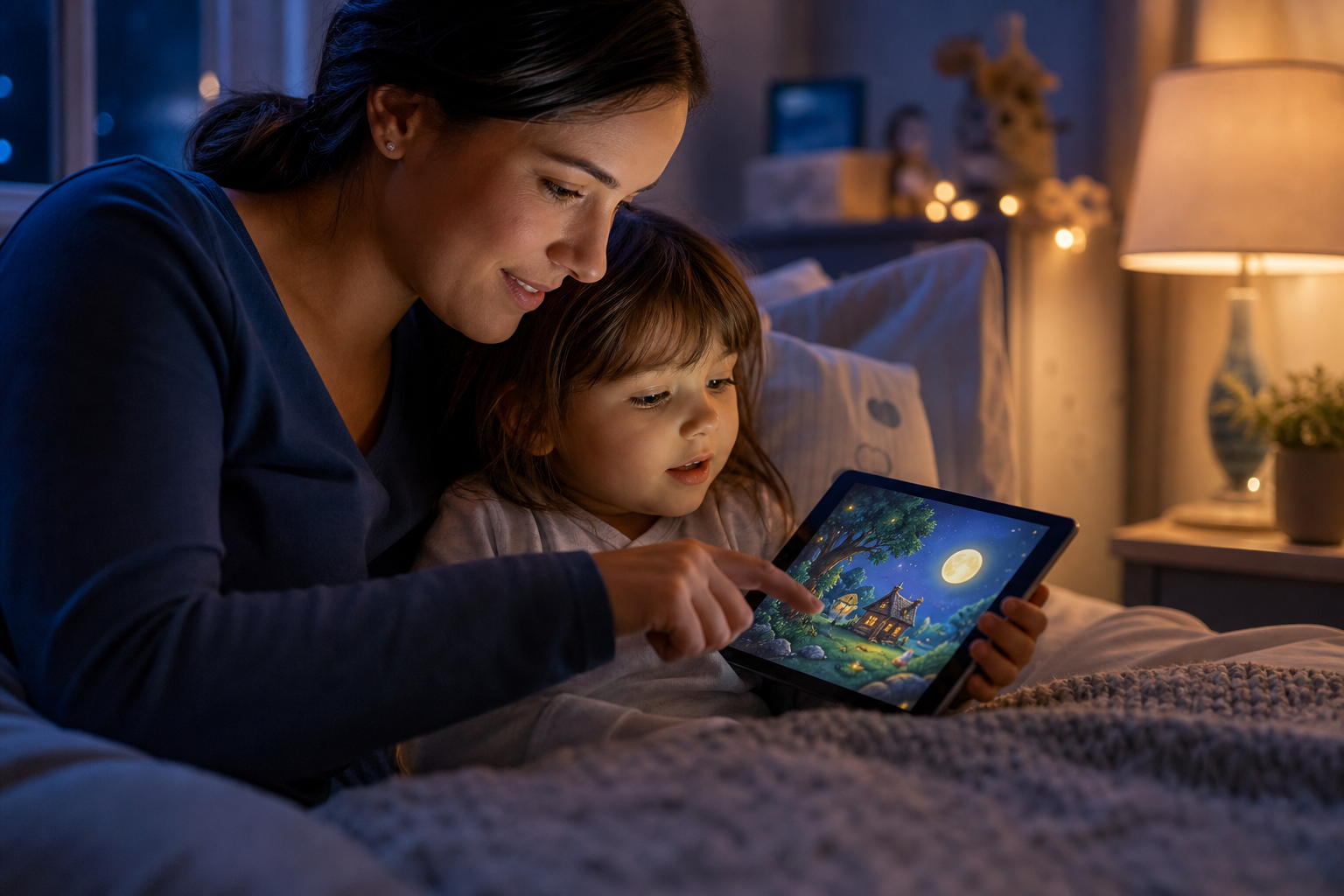
A storybook surface, not a video feed
Our stories use video pages, but they are not conventional videos. A page is a stable illustrated scene with subtle looping movement, professional narration, and multiple discoverable elements. The child can tap, listen, repeat, and notice. An adult can sit beside them and guide the story as parents have done with bedtime books for generations.
A professional reading of the evidence
Each writeup explains the study, the relevant findings, the limitations, and how the evidence informs Early Academy’s approach to interactive story publishing for young children.

Why shared reading should start early
Klass P, Miller-Fitzwater A, High PC, Council on Early Childhood · 2024
Shared reading should start early and continue as a family routine, not wait until formal school.
Read supporting document
Why prompts and participation matter
Whitehurst GJ, Falco FL, Lonigan CJ, et al. · 1988
Dialogic reading helps children build expressive vocabulary because adults prompt children to participate.
Read supporting document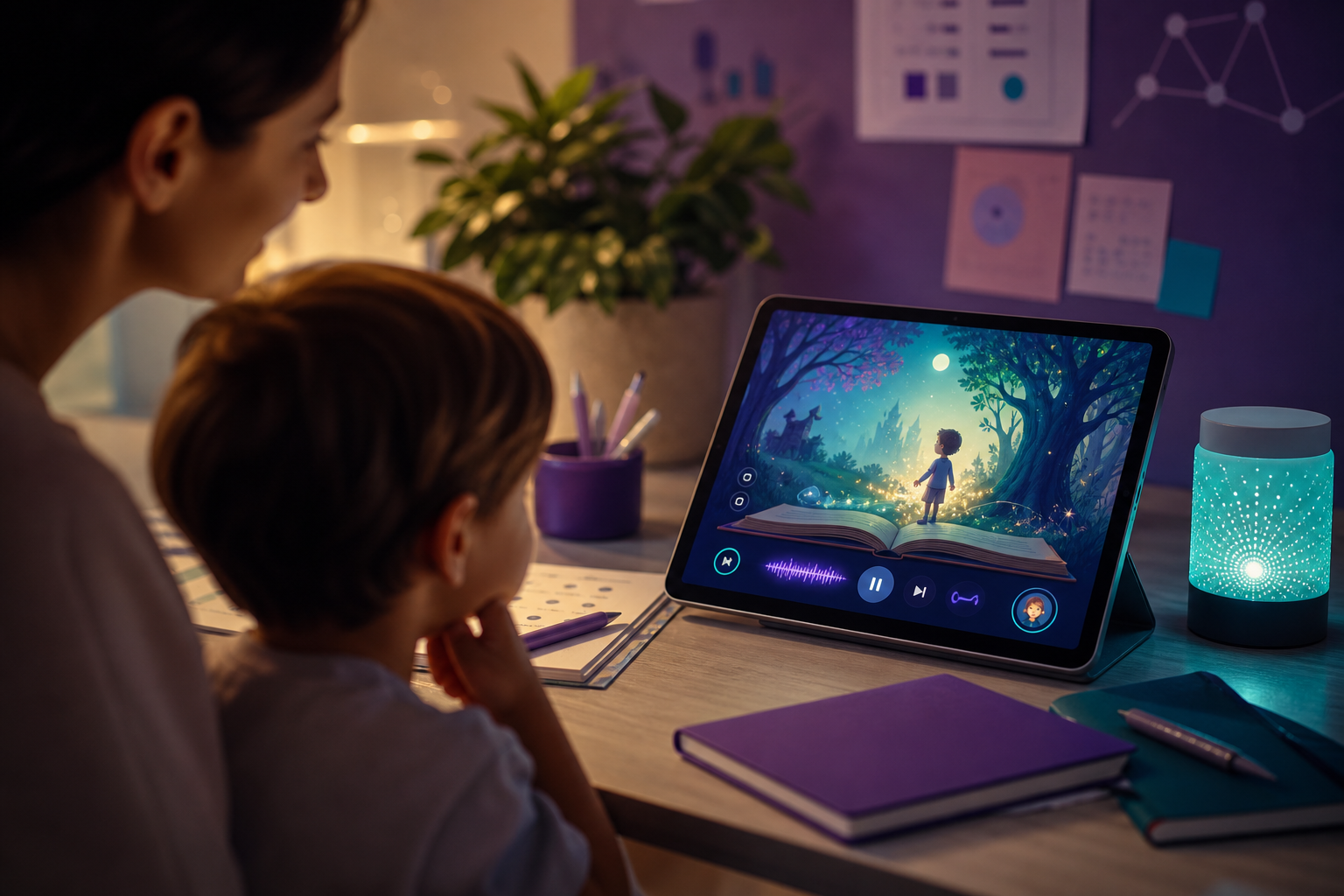
When technology improves story time
Takács ZK, Swart EK, Bus AG · 2015
Technology-enhanced storytelling can support vocabulary when it improves parent-child interaction.
Read supporting document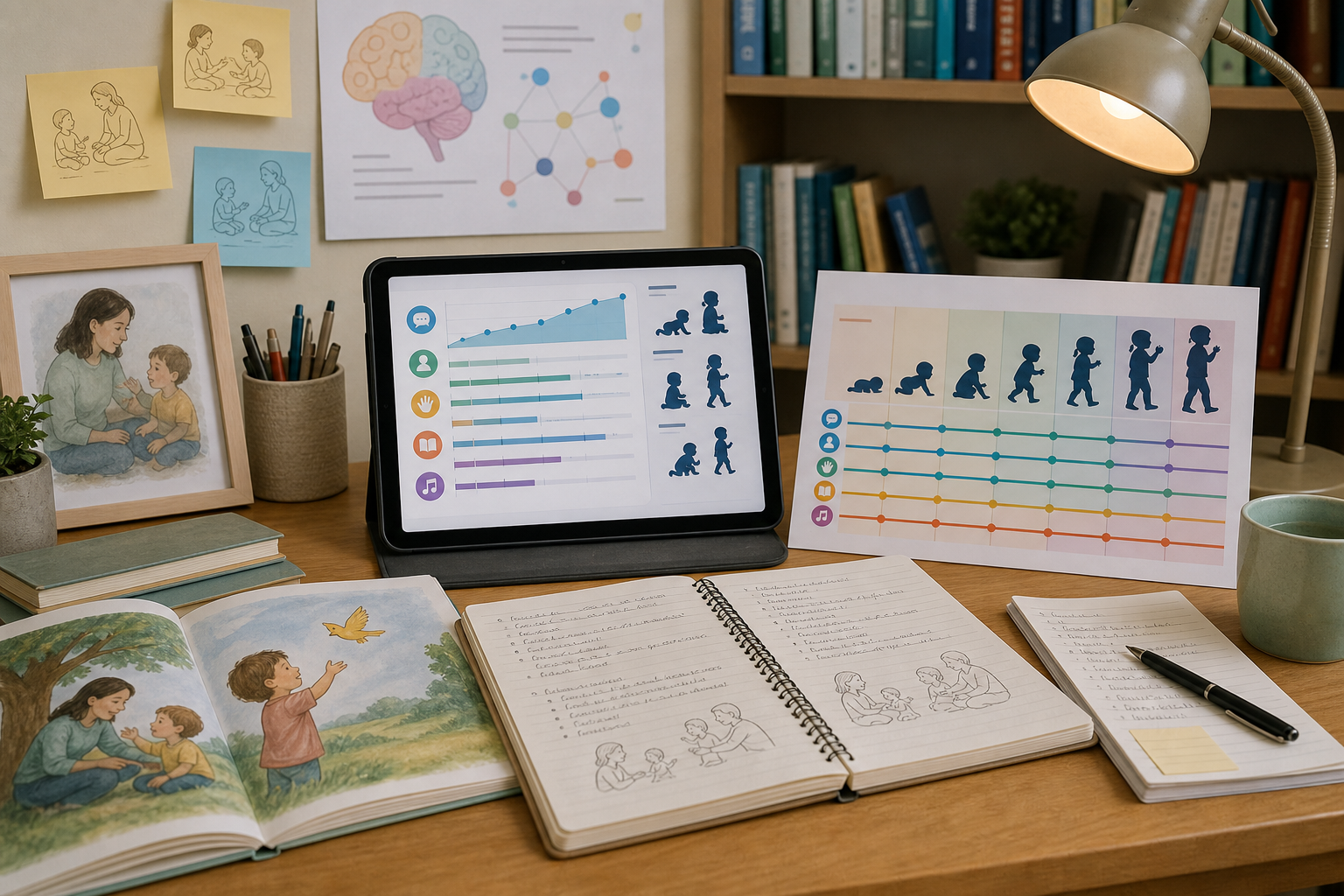
Why quality and co-viewing matter more than “screen time” alone
Madigan S, McArthur BA, Anhorn C, Eirich R, Christakis DA · 2020
Screen quantity can be a risk, while educational content and co-viewing are associated with stronger language outcomes.
Read supporting document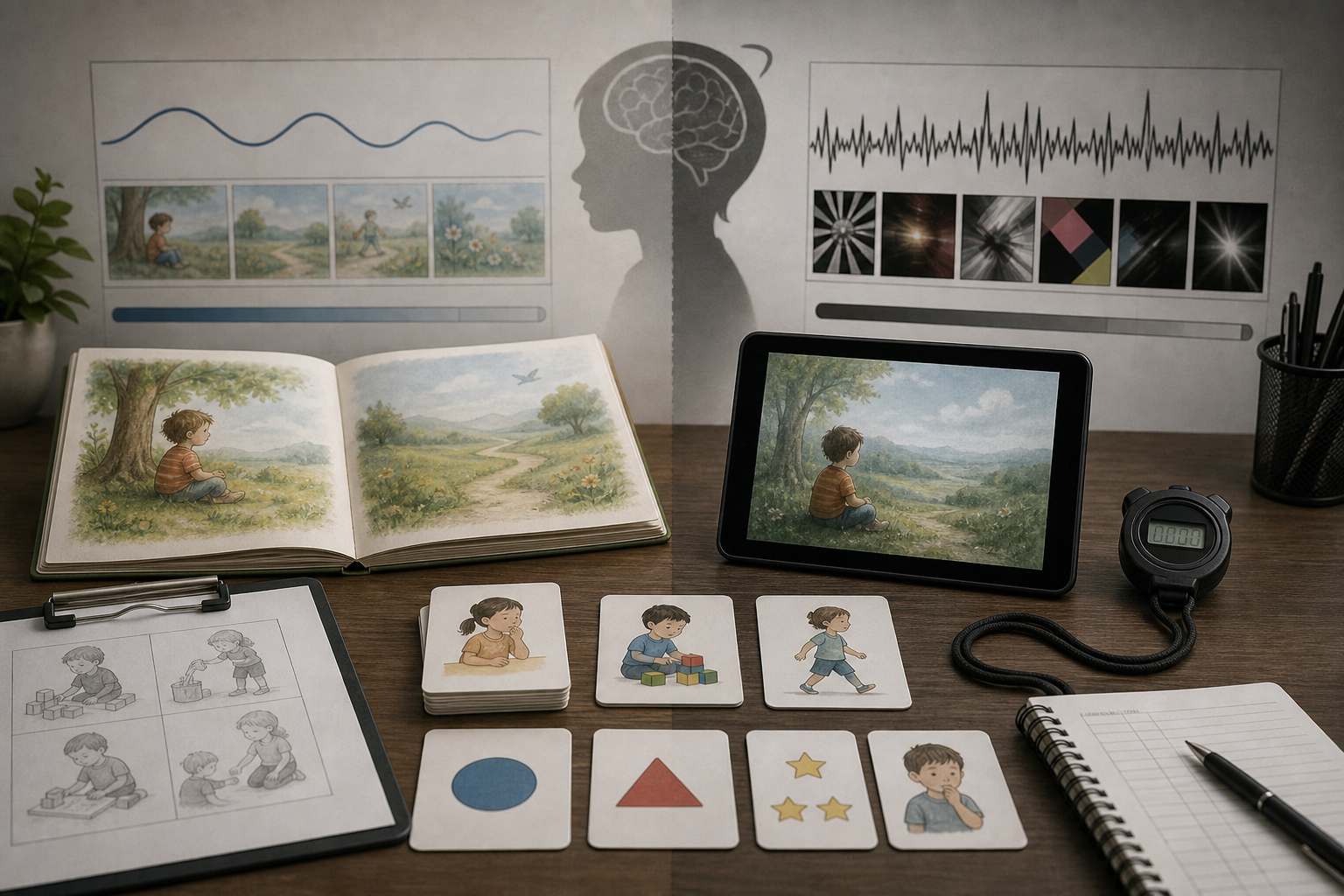
Why rapid-cut stimulation is not our model
Lillard AS, Peterson J · 2011
A controlled Pediatrics study found that just 9 minutes of fast-paced fantastical television temporarily impaired 4-year-olds’ executive function compared with educational TV or drawing.
Read supporting document
Why solo viewing and co-use are different categories
Mallawaarachchi S, Burley J, Mavilidi M, et al. · 2024
A 2024 meta-analysis found program viewing and background TV were negatively associated with cognitive outcomes, while co-use with caregivers was positively associated with cognitive outcomes.
Read supporting document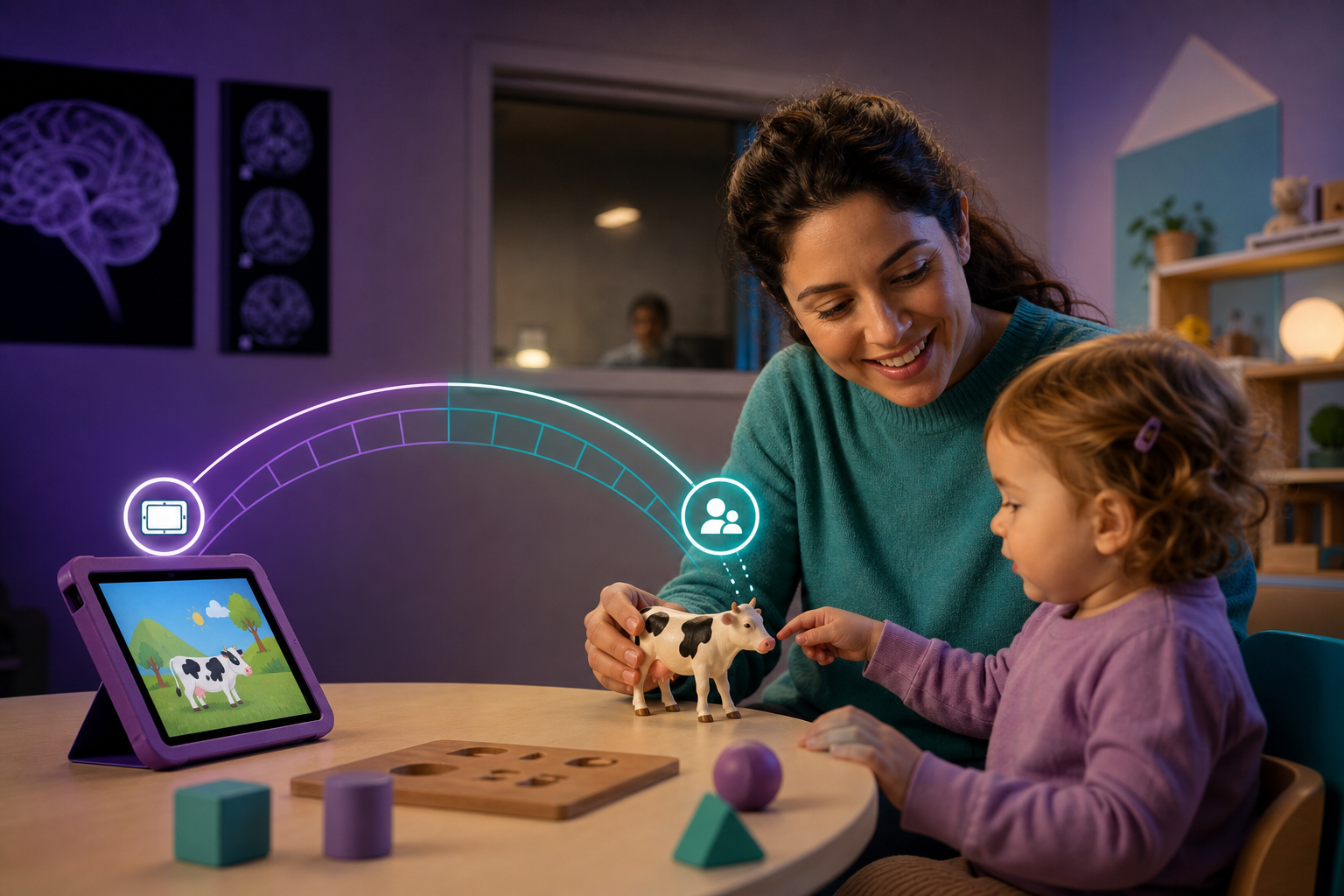
Why the app should not pretend to replace a person
Strouse GA, Samson JE · 2021
Across many studies, young children learn less from video than from face-to-face presentations, especially at younger ages.
Read supporting document
Why always-on media is not a learning routine
Ribner AD, Barr RF, Nichols DL · 2020
Background and entertainment television were negatively associated with language and literacy, with self-regulation helping explain the background-TV link.
Read supporting document
Why guided exploration beats passive viewing
Moser A, Zimmermann L, Dickerson K, et al. · 2020
Two-year-olds learned more from 2D media when parents supported the experience than from passive 2D viewing.
Read supporting document